Why Schaumburg Homes Can Still Benefit From a Water Softener
Understanding Lake Michigan Water, Mineral Buildup, Chlorine, and the Right Treatment for Your Home
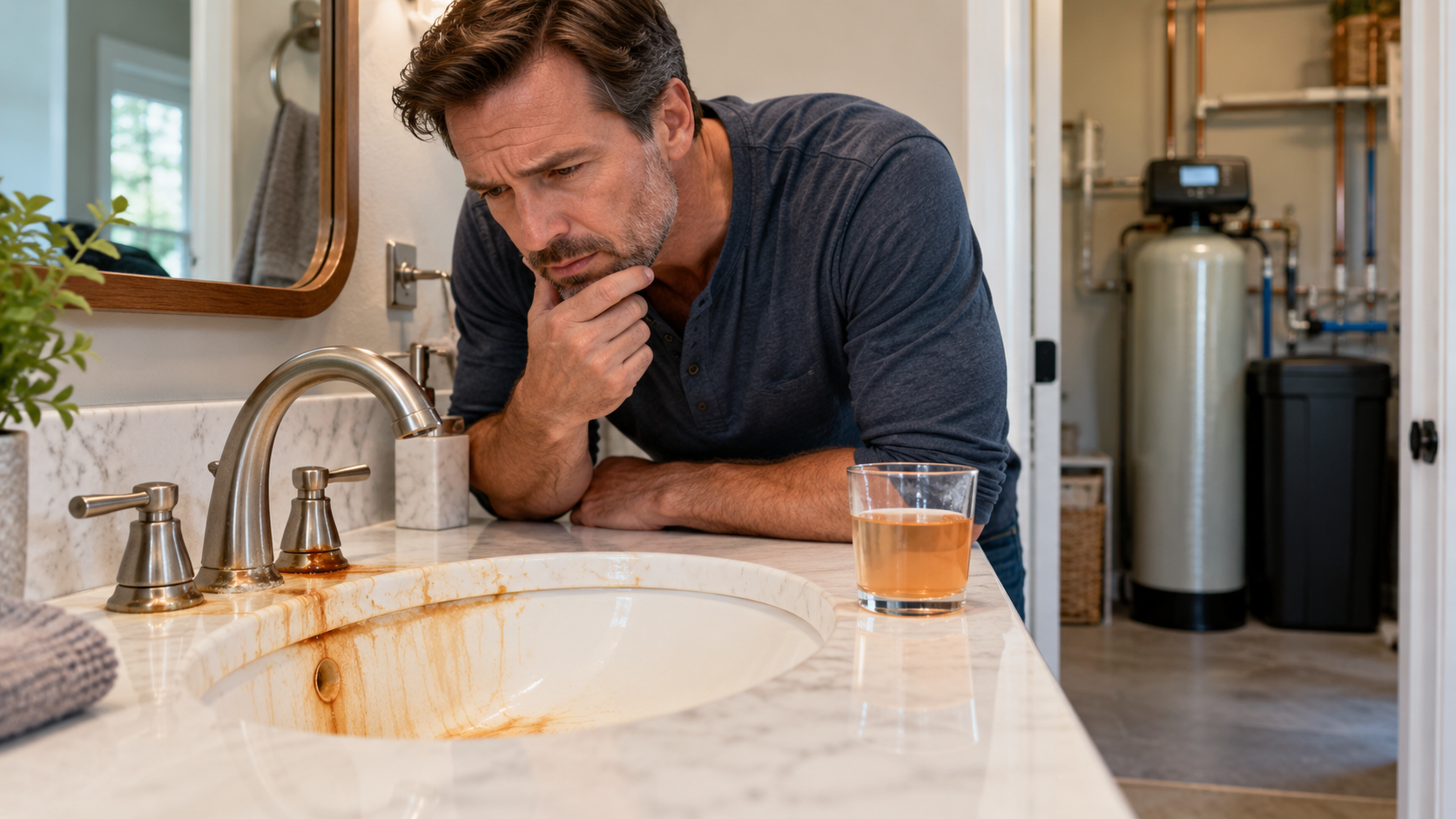
Many Schaumburg homeowners assume they do not need water treatment because their home receives professionally treated municipal water. That water is monitored for safety, but safe drinking water can still contain hardness minerals or have qualities that affect how it tastes, smells, and behaves inside the home.
If you notice cloudy glassware, residue around faucets, dry skin after showering, or a noticeable chlorine taste, your water may benefit from additional treatment. The key is understanding the difference between water softening and water filtration before choosing a system.
At Schaumburg Water Softener, we help homeowners identify their specific water concerns and choose equipment that makes sense for their home.
Where Does Schaumburg’s Water Come From?
Schaumburg receives treated Lake Michigan water through a regional municipal water system. Before reaching local homes and businesses, the water goes through treatment and is regularly tested for regulated contaminants.
The Village of Schaumburg’s most recent annual report states that its drinking water met federal and Illinois drinking water standards. Homeowners can review current testing information through the village’s annual water quality report.
Municipal treatment is designed to provide water that meets public health requirements. It is not intended to remove every mineral responsible for scale, every trace of chlorine, or every quality that affects taste and household use.
This distinction matters because water can meet safety standards while still leaving spots on dishes or buildup on plumbing fixtures.
What Causes Hard Water Problems?
Hard water contains dissolved calcium and magnesium. These minerals are naturally present in water and are generally not considered harmful at the levels commonly found in household supplies.
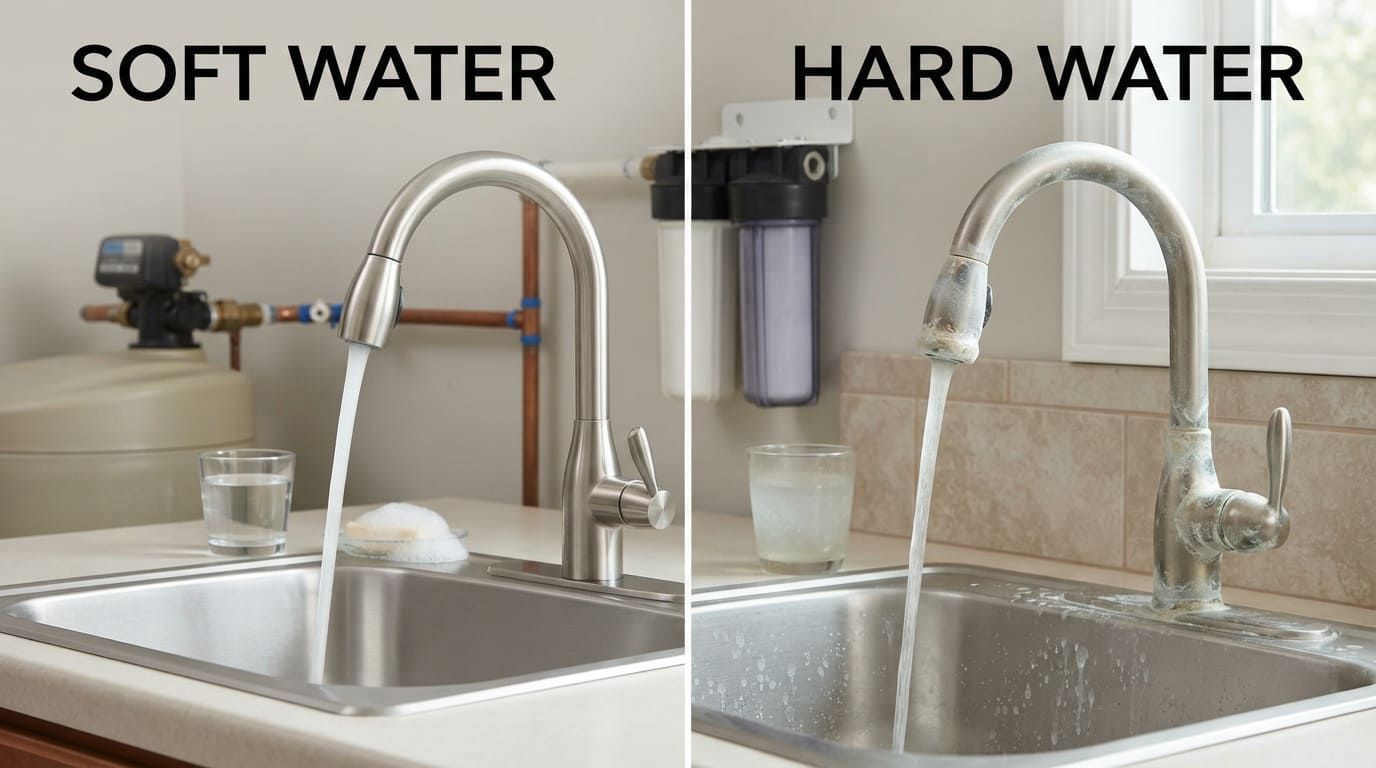
However, hardness minerals can create problems when water is heated, used with soap, or allowed to dry on a surface. Once the water evaporates, minerals remain behind as spots or chalky scale.
Common signs of hard water include:
- White spots on glasses and dishes
- Scale around faucets and showerheads
- Cloudy shower doors
- Soap that does not lather well
- Dry feeling skin and hair
- Stiff or dull laundry
- Mineral buildup in water using appliances
- Frequent cleaning of sinks, tubs, and fixtures
Some of these signs appear gradually. A homeowner may become used to scrubbing faucets or adding extra detergent without realizing that the water itself is contributing to the problem.
Why Municipal Water Can Still Leave Scale
Water treatment plants focus first on producing water that meets established drinking water standards. While treatment may reduce certain minerals, it does not necessarily make the water completely soft by the time it reaches your home.
Water conditions can also be affected by the local distribution system and the plumbing inside the property. Older pipes, water heater sediment, and fixture buildup may change what a homeowner experiences at the tap.
Lake Michigan water is often less mineral heavy than groundwater found in many parts of Illinois, but even moderate hardness can create visible residue over time. Homes that use a lot of hot water may notice the effects sooner because heating encourages hardness minerals to form scale.
The only reliable way to determine your home’s hardness level is to test the water at the property.
How a Water Softener Works
A traditional water softener removes calcium and magnesium through ion exchange. Inside the system, resin captures the hardness minerals as water passes through the tank. The system then regenerates periodically using a salt solution that cleans and recharges the resin.
Properly softened water can help:
- Reduce scale on faucets and fixtures
- Improve soap and shampoo performance
- Make dishes easier to clean
- Leave laundry feeling softer
- Reduce mineral deposits inside appliances
- Make bathroom cleaning less frustrating
A softener does not filter every substance from the water. Its primary purpose is to address hardness.
That is why it is important not to treat the words “softener” and “filter” as if they mean the same thing.
What a Whole House Water Filter Does
A whole house water filter is designed to address water quality concerns that a softener does not remove. Depending on the filter media, a system may help reduce chlorine, unpleasant tastes, odors, sediment, or other targeted substances.
Many homeowners consider filtration when their water has:
- A noticeable chlorine taste or smell
- An unpleasant taste at the kitchen faucet
- Sediment or particles
- Discoloration
- Odors that make the water less enjoyable
- Concerns identified through professional testing
The correct filter depends on what needs to be reduced. No single filtration system removes everything, so equipment should be matched to the water rather than selected from a general list of features.
Do You Need a Softener, Filter, or Both?
The answer depends on what you want to improve.
If white scale, spotted dishes, and poor soap performance are your main concerns, a water softener may be the right starting point. If taste, chlorine, odor, or sediment is the issue, a filtration system may be more appropriate.
Some Schaumburg homes benefit from a combined system. In this setup, the softener addresses calcium and magnesium while the filter handles chlorine, taste, odor, or other identified concerns.
A combined whole house water filter and softener can provide treated water throughout the property, including bathrooms, the kitchen, laundry area, and water using appliances.
How Hard Water Affects a Water Heater
A water heater is one of the places where mineral buildup can become especially costly. As hard water is heated, calcium and magnesium may settle inside the tank or collect on heating components.
This buildup can reduce heat transfer and force the water heater to work harder. Homeowners may also hear popping or rumbling noises as trapped water moves through layers of sediment.
Tankless water heaters are not immune. Their narrow internal passages and heat exchangers can also collect mineral scale, which is why manufacturers often recommend regular flushing in hard water conditions.
A correctly sized water softener can reduce new hardness deposits, although it will not remove old scale that is already inside the appliance.
Why System Sizing Matters
Choosing a water softener based only on the size of the tank can be misleading. Proper sizing should consider:
- The hardness level of the water
- The number of people in the home
- Average daily water use
- The number of bathrooms
- Peak household flow requirements
- Available installation space
- The efficiency of the control valve
- Any additional water quality concerns
An undersized system may regenerate too frequently or struggle to provide consistent soft water. An oversized or poorly programmed unit may waste salt and water.
The goal is not to install the largest unit available. It is to install a system with enough capacity and flow for the household while keeping regeneration efficient.
Start With a Water Test
Visible symptoms can point homeowners in the right direction, but they do not provide the full picture. White residue usually suggests hardness, while chlorine taste may call for carbon filtration. Discolored water, metallic taste, or unusual odors may require additional investigation.
Testing helps determine what is present and whether the issue comes from the municipal supply, the home’s plumbing, or the water heater. It also provides the information needed to recommend the correct equipment and settings.
A professional evaluation can help prevent homeowners from paying for treatment they do not need or installing equipment that does not solve the actual problem.
Improve the Water Throughout Your Schaumburg Home
You use water all day for drinking, cooking, bathing, laundry, and cleaning. Small improvements in water quality can make those everyday tasks noticeably easier.
If your home has scale, water spots, chlorine taste, dry feeling skin, or appliance buildup, Schaumburg Water Softener can help identify the cause. We provide water softener installation, whole house filtration, and combined treatment options based on the needs of Schaumburg, Illinois, homeowners.
Contact Schaumburg Water Softener to schedule a water assessment and find the right treatment system for your home.