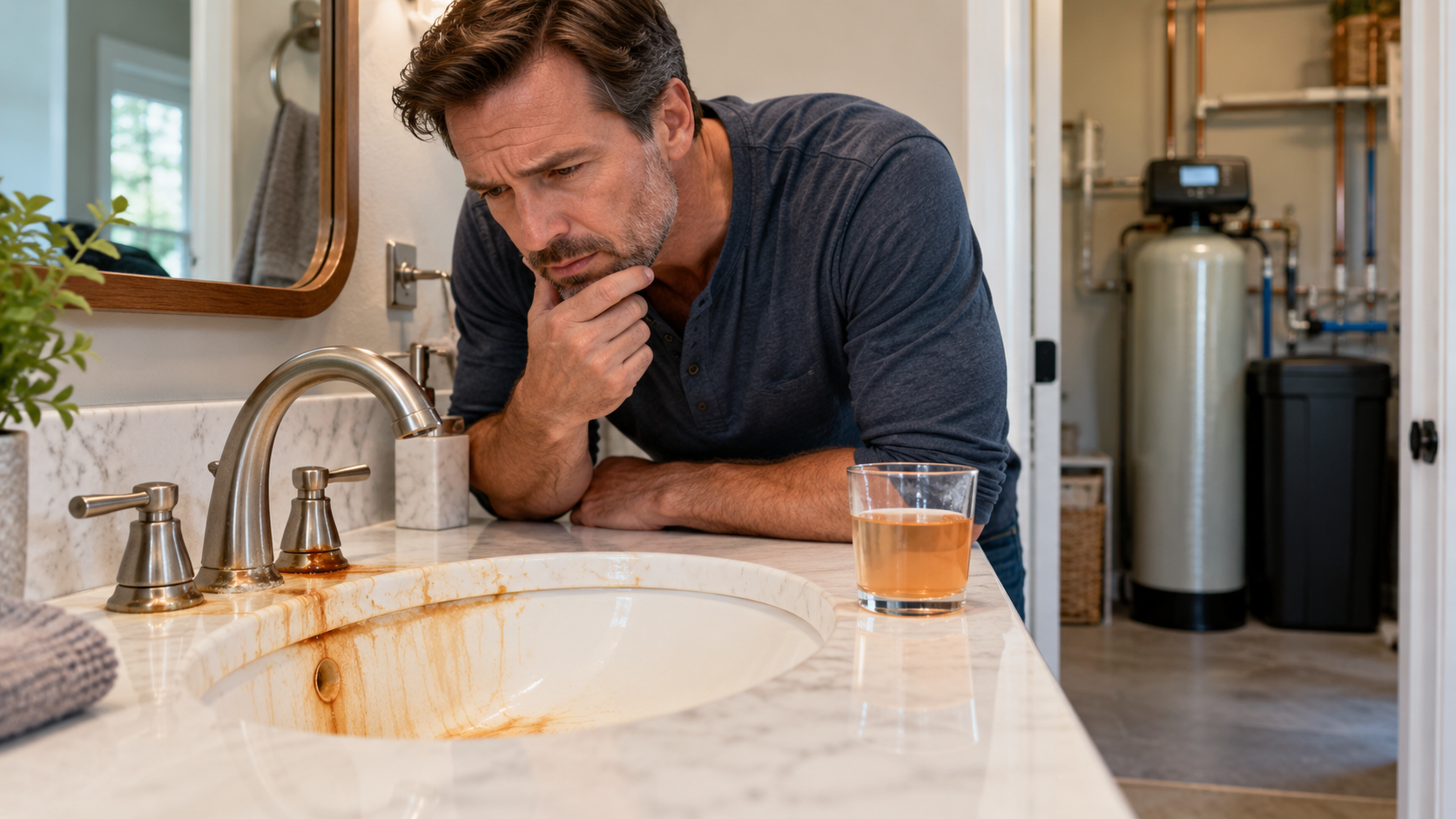
Soft Water vs. Hard Water: What Schaumburg Homeowners Can Notice
Hard water can affect more than your faucets and plumbing. The minerals in hard water can change how soap lathers, how your hair and skin feel after washing, how bright your laundry looks, and how clean your glassware appears. Understanding the difference between hard and soft water can help Schaumburg homeowners decide whether water treatment is worth considering.
What Is the Difference Between Hard and Soft Water?
The main difference comes down to minerals.
Hard water contains higher amounts of calcium and magnesium. These minerals naturally occur in water and are not always obvious when you turn on a faucet. However, their effects can become noticeable during everyday activities such as showering, washing clothes, doing dishes, and cleaning your home.
Softened water has had much of the calcium and magnesium removed through a water treatment process. With fewer hardness minerals present, water can interact differently with soaps, shampoos, detergents, and household surfaces.
The difference may seem small at first, but it can become more noticeable when you use the water every day.
Hard Water and Your Hair
If your hair feels dry, dull, or difficult to manage after washing, your water could be part of the equation.
Hard water minerals can interact with shampoo and leave mineral residue on the hair. Over time, this buildup can make hair feel less clean even after washing.
Softened water contains fewer hardness minerals, which can make it easier for shampoo to lather and rinse away. Some people notice that their hair feels smoother or easier to manage after switching from hard water to softened water.
Of course, hair condition depends on many factors, including hair type, products, and personal care routines. Water quality is simply one factor worth considering.
What About Your Skin?
The same mineral and soap interaction can affect how your skin feels after bathing.
Hard water can make it more difficult to rinse away soap completely. Some people may notice a dry or tight feeling after showering, particularly if they already have sensitive or dry skin.
With softened water, soap and body wash can lather more easily and rinse differently. This can leave a different sensation on the skin after bathing.
If you regularly feel like you need extra moisturizer after showering, looking at your water quality may be worthwhile.
Laundry Can Look Different Too
Your washing machine uses a significant amount of water, so hard water can have an effect on your laundry routine.
Hardness minerals can interact with detergents and may make it more difficult for cleaning products to work effectively. Clothes can sometimes come out feeling less soft or looking less vibrant after repeated washing.
Softened water can help detergents work more efficiently because there are fewer calcium and magnesium minerals competing with the cleaning process.
That can make a difference when washing towels, bedding, work clothes, and everyday clothing.
Why Does My Glassware Have Spots?
One of the easiest signs of hard water to recognize is spotting on glassware.
After washing, water evaporates from glasses, dishes, and utensils. If the water contains significant amounts of calcium and magnesium, those minerals can remain behind as cloudy spots or a thin residue.
You may wash the same glasses repeatedly and still find yourself wiping away spots before putting them on the table.
Reducing hardness minerals can help minimize this type of mineral residue and make cleaned glassware look clearer.
Hard Water Can Also Mean More Cleaning
The effects of hard water are not limited to the kitchen.
Mineral deposits can accumulate around faucets, showerheads, sinks, shower doors, and other surfaces exposed to water. Once the water evaporates, the minerals remain behind.
This means homeowners may spend additional time cleaning fixtures simply to keep them looking presentable.
Softened water can reduce the amount of hardness mineral residue left behind, which may make some household cleaning tasks easier.
Which Water Is Better for Your Home?
There is no single answer that applies to every household because water conditions vary from one property to another.
If your home has relatively soft water, you may not need a traditional water softener. If testing shows significant hardness and you are experiencing recurring mineral buildup, appliance concerns, or noticeable effects during washing and cleaning, water softening may be worth exploring.
The first step is understanding what is actually in your water.
A professional water test can measure hardness and provide useful information before you invest in a treatment system.
Find Out What Your Water Is Doing
If you live in Schaumburg, WI, and regularly deal with cloudy glassware, mineral deposits, dry feeling hair, or laundry that does not seem as bright as it used to, hard water could be contributing to the problem.
Schaumburg Water Softener helps homeowners understand their water quality and explore water softening solutions suited to their household needs. If you want to know whether hard water is affecting your home, contact Schaumburg Water Softener to discuss your water and possible treatment options.